
• Skip to primary navigation
  • Skip to main content
  • Skip to primary sidebar
Friends of Midway Atoll

Friends of Midway Atoll

Preserving, protecting, and restoring the biological diversity and historic resources of Midway Atollal Wildlife Refuge

  • Home
  • About Us
    • What We Do
    • Our Team
  • Explore
  • Get Involved
    • Resources to Learn More
    • Advocacy
    • Volunteer
    • Join & Give
    • Subscribe
  • Live Cam
  • Donate
  • Contact
  • Show Search
Hide Search
Home/Get Involved/Advocacy

Advocacy


Volunteer bird counters transit Eastern Island at daybreak
Kuaihelani (Midway Atoll) Dec. 2024 Photo by: Dan Rapp

The Threat Fall 2025

Powered by the Papahānaumokuākea Native Hawaiian Cultural Working Group (CWG), and Papahānaumokuākea Coalition, the Friends of Midway Atoll stand in solidarity to halt an immediate threat driven by Western Pacific Fishery Management Council (Wespac) and the Administration: namely a move to reverse existing protective federal regulations, and allow commercial fishing on an industrial scale within the waters of Papahānaumokuākea National Marine Sanctuary. This Marine National Sanctuary encompasses all waters within the Northwestern Hawaiian Islands inside of 200 miles and surrounding Midway Atoll and Hawaiian Islands National Wildlife Refuges.  Federal regulations do not allow fishing within the boundaries of the National Marine Sanctuary.   Please join us in resisting this threat to Kuaihelani (Midway Atoll).

What You Can Do

#1 ACTION: Sign the petition Keep Papahānaumokuākea Off-Limits to Commercial Fishing!

#2 ACTION:  PREPARE YOUR COMMENTS DUE OCTOBER 14, 2025. National Marine Fisheries Service (NMFS) and the National Oceanic and Atmospheric Administration (NOAA) are currently seeking comments and recommendations concerning EO14276 “Restoring American Seafood Competitiveness.” See notice in the Federal Register here. 

Responses are submitted via email to nmfs.seafoodstrategy@noaa.gov. Include “E.O. 14276 Notice Response” in the subject line of the message. Because comments are submitted via email, we are unsure how these will be displayed for public access. For this reason, we ask that you also BCC huimanamana@gmail.com on your email submission, or send CWG a copy of your comments. This is an important step to show solidarity!

The Office of Hawaiian Affairs and CWG also encourages individuals and organizations to send personalized letters in opposition to commercial fishing in Papahānaumokuākea and other marine protected areas.

Formal Comments:

Submitted by the Friends of Midway Atoll available here.

Office of Hawaiian Affairs and Papahānaumokuākea Native Hawaiian Cultural Working Group, intends to share a version of this joint letter available here.

ACTION: Follow, Like and Share Papahānaumokuākea Native Hawaiian Cultural Working Group, Papahānaumokuākea Coalition and Friends of Midway Atoll on social media.

REQUEST to join the Papahānaumokuākea Coalition by emailing huimanamana@gmail.com. Papahānaumokuākea Coalition is a community-powered coalition, created in 2016, with a collective interest in protecting the natural and cultural heritage of Papahānaumokuākea.

ACTION: Contact your State congressional representatives who are responsible  to mālama, to care for, federally protected conservation areas.

  • If you live in the State of Hawaiʻi, email Senator Brian Schatz here or phone his offices at 808.523.2061 in Honolulu or 202.224.3934 in Washington.
  • Should you reside outside the State of Hawaiʻi link to the House Natural Resource Subcommittee on Water, Wildlife, and Fisheries. Here are links to the Republican and Democratic members. Also, here are the contacts on the Senate side fisheries are in at: Environment & Public Works Committee.

Keep your Friends of Midway Atoll membership active so you can directly help wildlife thrive on Kuaihelani and at the very least, subscribe to our free newsletter so we can keep you abreast of opportunities to have your voice be heard and counted.

Chronology of 2025 Significant Actions

April 17, 2025: President Trump issued the proclamation entitled “Unleashing American Commercial Fishing in the Pacific” that attempted to allow industrial fishing in the protected Pacific Island Heritage Marine National Monument located 1000 miles south of Kuaihelani and the executive order “Restoring American Seafood Competitiveness” that called for a review of all marine monuments. A public comment is currently underway and ends on October 14, 2025. Federal register notice is here. 

A directive of EO 14276 (section 4(ii)) Restoring American Seafood Competitiveness, instructs the Secretary of the Department of Commerce to: 

“…solicit direct public comments, including from fishing industry members, technology experts, marine scientists, and other relevant parties for innovative ideas to improve fisheries management and science within the requirements of the Magnuson-Stevens Fishery Conservation and Management Act (16 U.S.C. 1801 et seq.); the Endangered Species Act of 1973 (16 U.S.C. 1531 et seq.); the Marine Mammal Protection Act (16 U.S.C. 1361 et seq.); and other applicable laws.

July 18, 2025: The State of Hawai'i Office of Hawaiian Affairs submits a letter of opposition to U.S. Department of Commerce Secretary Howard Lutnick and Secretary U.S. Department of Interior Doug Burgum.

July 24, 2025: Wespac's letter dated to U.S. Secretary of Commerce Howard Lutnick notes their justification and recommendation to President Trump available here.

August 8, 2025: Kiaʻi Papahānaumokuākea: Protecting our Puʻuhonua From Commercial Fishing Joint Statement Released from the Office of Hawaiian Affairs and the Papahānaumokuākea Native Hawaiian Cultural Working Group in opposition of commercial fishing.

September 16 and 17, 2025: The 204th Wespac Meeting was held in Honolulu, Hawai'i. Public comments were submitted and personal testimonies were delivered. In attendance on September 16th were Native Hawaiians, scientists, others passionate and knowledgable about the planetary significance intrinsic to Pacific Islands Heritage Marine National Monument and Papahānaumokuākea Marine National Sanctuary. With just 24 hours notice, the Friends of Midway Atoll Communications Directorate and President swiftly combined their thoughts and submitted a comment on behalf of Friends of Midway Atoll available here: (link forthcoming).

Post Wespac Meeting News: Watch KHON2 News on Wespac Meeting

September 17, 2025: Despite public effort to halt Wespac's progress to disregard federal fishing regulations in Papahānaumokuākea, Wespac voted to move forward with proposing commercial fishing in Papahānaumokuākea Marine National Sanctuary. Watch the news coverage below!

https://www.hawaiinewsnow.com/video/2025/09/17/federal-regulators-vote-favor-president-trumps-push-commercial-fishing-marine-monument

September 17, 2025: The Papahānaumokuākea National Marine Sanctuary Advisory Council (SAC) in Honolulu, O'ahu collected and heard and filed public comments. The SAC is an advisory body to NOAA’s Office of National Marine Sanctuaries made up of a broad range of stakeholder constituencies.

Background Information and References

August 8, 2025 Kiaʻi Papahānaumokuākea: Protecting our Puʻuhonua From Commercial Fishing Joint Statement Released from the Office of Hawaiian Affairs and the Papahānaumokuākea Native Hawaiian Cultural Working Group in opposition of commercial fishing. Click on this text to open statement and download to use for cultural reference and context.

Discover what makes this extraordinary marine world productive, and enables it to in turn provide a source of fish stocks in places outside the boundaries of the Sanctuary where fishing is currently allowed. For more information visit https://manoa.hawaii.edu/news/article.php?aId=13615 and https://www.aaas.org/news/papahanaumokuakeas-marine-protections-benefit-regions-tuna-fishery.  It comes down to us to give the predators of the sea a chance to thrive for their livelihood that also sustains all wild and human life including providing stock fisheries for the commercial fisheries.

How does this threat impact Kuaihelani and Papahānaumokuākea?

Native Hawaiians consider Papahānaumokuākea as the original source of life, as well as the sacred realm of Pō, a place of ancestors. In July 2025 a Joint Statement was released by the Papahānaumokuākea Native Hawaiian Cultural Working Group and Office of Hawaiian Affairs in response to Executive Order 14276 6 (Apr. 17, 2025): Restoring American Seafood Competitiveness titled Kiaʻi Papahānaumokuākea: Protecting our Puʻuhonua From Commercial Fishing This statement describes the potential impact that a commercial fishery could have on this wahi pana. A list of cultural studies are also available on the Papahānaumokuākea Native Hawaiian Cultural Working Group website here.

Science tells us commercial fisheries operating within the federally protected waters of the Sanctuary could minimize and substantially reduce the availability of food source for millions of seabirds when they nest and rear their young on Kuaihelani (Midway Atoll).  

In addition to reducing fish availability for seabirds and Hawaiian monk seals, commercial fisheries have been implicated in reducing populations by causing mortality as albatrosses and monk seals interact with the fishing gear itself and drown.  In recognition of this problem in 1991 the Western Pacific Regional Fishery Management Council itself created a Protected Species Zone out to 50 miles from the islands to eliminate longline mortality with the endangered Hawaiian monk seal. The risk for seabirds breeding at Midway, particularly albatrosses, of dying through gear interactions with longline fisheries extends beyond 50 miles from shore and is higher closer to the atoll where they are concentrated, especially while they are feeding their young chick!

Reopening commercial fisheries within the federally protected waters of Papahānaumokuākea could impact the food source of millions of seabirds while they are nesting and rearing their young on Kuaihelani (Midway Atoll).  Fish available in the seas surrounding Kuaihelani sustain seabird parents and provide food for them to feed their young.  Also, there is a serious risk for seabirds breeding at Midway, particularly albatrosses, of dying through gear and particularly baited hook interactions.

Previously when commercial fisheries existed in the Northwestern Hawaiian Islands they were shown to be overexploited. In 2000, the lobster fishery was closed indefinitely following a court case indicating that the fishery was impacting monk seal recovery, and scientific data revealed that spiny lobster and slipper lobster populations had plummeted. Non-targeted species like sharks were also severely impacted by commercial fishing operations, with up to 10,000 sharks discarded annually as bycatch.

One of the most significant threats to the survival of Hawaiian monk seals is discarded nets and fishing gear. Hawaiian monk seals have been found entangled in a variety of derelict fishing gear including nets, lines and hooks discarded by commercial fishing operations. Monk seals are still frequently entangled in Papahānaumokuākea making it very difficult for seals to breathe, leading to injury and possibly death.

References and Priority Messages by the Papahānaumokuākea Coalition

Antiquities Act:

The Antiquities Act of 1906 gives the President power to set aside land as “historic landmarks, historic and prehistoric structures, and other objects of historic or scientific interest” without having to go through Congress. Presidents have the authority to designate national monuments under the Antiquities Act, not to modify or abolish them. Presidents from both parties have designated a total of 168 national monuments under the Antiquities Act. 

Recent Federal Protection Administrative History

The Papahānaumokuākea Marine National Monument of the Northwestern Hawaiian Islands was created in 2006 by George W. Bush to protect the waters extending 50 nautical miles; it was expanded in August 2016 by President Obama to 200 nautical miles. The expanded area was actually smaller than originally proposed by Native Hawaiian leaders to preserve access for local fishermen by maintaining the current boundaries of the PMNM east of 163° West Longitude. This was a direct result of input from stakeholders and demonstrates that the public process was inclusive. The current size is 582,578 square miles (1,508,870 km2).

Strong Bipartisan Support 

As a puʻuhonua (refuge) for millennia, Papahānaumokuākea has received bipartisan support to preserve its natural and cultural heritage for more than 25 years. Papahānaumokuākea was established as a coral reef ecosystem reserve in 2000, a marine monument in 2006, a UNESCO (United Nations Educational, Scientific and Cultural Organization) World Heritage Site in 2010, and a national marine sanctuary in early January 2025.

Message Points

  • Monument waters protect ecosystems that are essential for more than 7,000 species–a quarter of which are found nowhere else on Earth.
  • Monument waters provide feeding and breeding grounds for more than 14 million birds from 22 different species.
  • Important geological features are located in the expanded area, including more than 75 seamounts, as well as a non-volcanic ridge that extends southwest towards the Johnston Atoll. Together, these features form biodiverse hotspots in the open-ocean that provide habitat for deep-sea species, including sponges, other invertebrates, fish, and colonies of corals many thousands of years old.
  • The land and sea of Papahānaumokuākea protect ecosystems that are essential for more than 7,000 species–a quarter of which are found nowhere else on Earth. Monument waters provide feeding and breeding grounds for more than 14 million birds from 22 different species, protect highly mobile predators such as tiger and Galapagos sharks, and twenty-four species of whales and dolphins. Seamounts in the monument are biodiverse hotspots that provide habitat for deep-sea species, including sponges, other invertebrates, fish, and colonies of corals many thousands of years old. Expedition to the deep-sea ecosystems discover new species on nearly every survey, including the world’s oldest organism, a 4,000-year-old deep-sea coral.

Military History

  • The original boundaries of Papahānaumokuākea includes objects from the Battle of Midway of World War II, however the expanded monument protects additional sites, including the USS Yorktown, an aircraft carrier torpedoed during the battle, found at more than 16,000 feet below the ocean's surface.
  •  All told, the expanded area serves as a final resting place for the more than 3,000 people lost during the battle.

Culture

  • The Northwestern Hawaiian Islands and its surrounding waters are held in the highest regard and respect by Native Hawaiians, from which it is believed all life began, and to which ancestral spirits return after death.
  • The expanded Papahānaumokuākea monument boundary ensures that biocultural resources are safeguarded from any extractive, commercial, or industrial activities that are incompatible with Native Hawaiian traditional beliefs.
  • The elevation of the Office of Hawaiian Affairs to a monument Co-trustee position of Papahānaumokuākea rightfully placed the Native Hawaiian voice at all levels of decision making in the governance of Papahānaumokuākea. This act was applauded as it values the integration between traditional knowledge and contemporary science in management activities.
  • Maintaining the protections keeps in tact the cultural voyaging seascape in the Hawaiian Islands, since ancient Hawaiian chiefs would voyage between the main Hawaiian Islands and the Northwestern Hawaiian Islands. Traditional long distance voyaging and wayfinding includes observing the sun, moon, stars, and elements of the natural environment, such as migratory seabirds and leaping fish, which depend on healthy ecosystems. This practice has been revived today and is particularly exemplified by the Polynesian Voyaging Society and Hōkūleʻa, a double-hulled sailing canoe.
  • Papahānaumokuākea is the ancestral homeland of Native Hawaiians, and the place we return when we leave the physical world. It is a place that remembers the traditional stories, ancestral wisdom, and spiritual life, remaining a major part of our living heritage. The name, Papahānaumokuākea, given by Papahānaumokuākea Native Hawaiian Cultural Working Group (CWG) elder Dr. Pualani Kanakaʻole Kanahele, is a union between two important primordial beings: Papa (Earth Mother) and Wākea (Sky Father). This union represents life, birth, growth, and regeneration.

Healthy Fisheries

Benefits of Marine Reserves

  • Maintaining a balanced marine ecosystem is key to preserving fish populations and all forms of wildlife. Science has shown marine reserves such as Papahānaumokuākea and the Pacific Islands Heritage help to do this by protecting smaller fish, which then grow and mature in the reserve, and can then be caught once they swim beyond its boundaries. This “spillover” effect ensures the sustainability of these populations into the future and has far-reaching benefits for the fishing community.
  • Using data collected onboard fishing boats by scientific observers, the study found that the world’s largest no-fishing zone, Papahānaumokuākea Marine National Monument, has increased the catch rate of yellowfin tuna by 54% in nearby waters. Catch rates for bigeye tuna (also known as ʻahi) increased by 12%; catch rates for all fish species combined increased by 8%.https://www.science.org/doi/10.1126/science.abn0098
  • Not only do the reserves allow fish time to mature, but they protect fragile habitats that are essential for fish populations to flourish. For example, sea grass beds are important nursery grounds for crabs, shrimp, and many species of fish. Coral reefs, which are home to a quarter of all marine life on the planet are also important habitat for fish, which receive critical protections within the boundaries of the marine monuments.
  • Industrial fishing methods can catch and entangle marine wildlife–including endangered whales, dolphins, sea turtles, sharks, and seabirds–and cause harm to fragile corals. Commercial fishing also removes large numbers of fish and top predators, which disrupts ecological food webs and degrades ecosystem function.
  • In 2014, 5,660 sharks were caught as bycatch in the expanded PMNM area, according to longline logbooks. 90% of those sharks (5,128) are blue sharks, which are listed as “Near Threatened” by IUCN.
  • In the expanded area, in 2014, one shark was caught as bycatch for every two bigyeye tuna (total bigeye catch for area: 11,727)

Economics

The amount of fish that the Hawai‘i-based commercial longline industry is allowed to catch annually is managed by a quota-based system. This quota is determined by international negotiations informed by scientific advice. 

o   Once the annual quota is set, fishing occurs until that quota is reached. 

o   Longline vessels based in Honolulu have continuously met their quota while fishing in both the U.S. Exclusive Economic Zone and in international waters.

The expanded area of the Northwestern Hawaiian Islands was not a major fishing ground for the Hawai‘i-based longline fleet. 95% of the fish landed in Honolulu is caught in international waters or the Main Hawaiian Islands EEZ. 

What is the linkage between Pacific Islands Heritage Marine National Monument, a federal marine protected area south of Papahānaumokuākea Marine National Sanctuary?

Pacific Islands Heritage MNM Administrative History:

In 2009, George W. Bush established the what was at that time called the Pacific Remote Island Marine National Monument that now protects and preserves the marine habitats of five uninhabited island or atoll complexes: Wake, Jarvis, Howland and Baker Islands, Johnston Atoll, and Kingman Reef and Palmyra Atoll with protections to 50 nautical miles. The nearest of these U.S. territories is Palmyra Atoll, located approximately 1,000 miles southwest of the main Hawaiian Islands.

In 2014, President Obama expand three out of the five sites, Wake, Johnston and Jarvis. The expanded area was actually smaller than the 782,000 square miles that the President initially considered, which was a direct result of input from the commercial fishing industry. This compromise shows the public process was inclusive.

The original monument designation of the Pacific Remote Islands Marine National Monument includes 33 seamounts, yet the expansion areas include approximately 132 more. Estimates are that 15 to 44 percent of the species on a seamount or seamount group are found nowhere else on Earth. Of note, roughly 5 to 10 percent of invertebrates found on each survey of a seamount are new to science. These areas provide the opportunity for identification and discovery of many species not yet known to humans, with possibilities for research, medicines, and other important uses.

·  The expanded area provides significant migratory paths and feeding grounds for five species of protected turtles including the endangered leatherback, loggerhead, and olive ridley turtles. Since the Monument was established, scientific research on manta ray movement has shown that manta rays frequently travel over 600 nautical miles away from the coastal environment.

·  The expansion areas provide the foraging habitat for several of the world’s largest remaining colonies of Sooty Terns, Lesser Frigatebirds, Red-footed Boobies, Red-tailed Tropicbirds, and other seabird species. Many of these wide-ranging species make foraging trips of 300 miles or more from their colonies on the Monument’s islands, atolls, and reefs.

Modern Day History

  • Known as the Hui Panalā‘au, a group of 135 mainly Native Hawaiian young men, were sent, from 1935 – 1942, to live for six weeks to several months at a time on the uninhabited Pacific equatorial islands of Howland, Baker, Jarvis, Enderbury, and Canton to claim the islands for the United States. This colonization allowed President Franklin Roosevelt to secure U.S. territorial claims of the islands, which became an important base during WWII. Two of these men, Hawaiʻi’s sons, died in the shelling of Howland Island by the Japanese on December 8, 1941. The bravery and sacrifice of these men should not be forgotten.
  • Wake Atoll has been designated a National Historic Landmark because of the battle that took place there in December 1941. Features include U.S. defensive structures, historic shipwrecks, features related to American prisoners of war, among other important artifacts and memorials.

Economics

The expanded area of the Pacific Remote Islands Marine National Monument was not a major fishing ground for the Hawai‘i-based longline fleet. Only 4% of their annual fish catch was landed in the Pacific Remote Islands expanded area. This catch is still being caught where most of the fishing is already taking place.

Scientists emphasized how even small amounts of industrial fishing by large-scale longline and purse-seine fleets are destructive to these fragile ecosystems and cause significant harm, including killing and injuring thousands of threatened and endangered wildlife each year, including sharks, sea turtles, and seabirds. Include bycatch numbers from Alan’s declaration or the op-ed

Experts underscored the ecological connectivity between the monuments and the main Hawaiian Islands, that show protected areas have increased fish populations and provide spillover benefits in the waters immediately adjacent to the monuments. Include stat from study that they did not experience harm with expansions 

Advocates share the importance of safeguarding these irreplaceable ecosystems, honoring sacred Native Hawaiian and Pacific Islander cultural heritage, and upholding the integrity of protected areas in the face of extractive threats such as industrial fishing and deep-sea mining.

List of Scientific Studies on Albatross, Monk Seal and Sea Turtle Interactions with Hook-and-Line Fisheries in the Pacific Ocean

Quantifying impacts of seabird bycatch using genetic assignment: A case study of black-footed albatross in U.S. fisheries Authors:Jessie N. Beck et al. (2025) Published Biological Conservation 303 (2025) journal homepage: www.elsevier.com/locate/biocon

Statement by one of the authors: Most of the BFAL bycatch in Alaska and Hawaii fisheries comes from French Frigate Shoals (FFS). In this study it notes “The FFS made up 61–75% of BFAL bycatch in both Alaska and Hawaiʻi fisheries, despite being only 7% of the total metapopulation.” This statement clarifies that the Papahānaumokuākea birds at Lalo (French Frigate Shoals) are very gravely impacted bycatch versus the birds from Japan and elsewhere in the Pacific.

Abstract:Migratory species encounter multiple threats as they move through and occupy distinct habitats (Bairlein, 2016). Assessing the severity of interacting threats complicates quantifying the cumulative impact yet is critical for management and conservation (Mahon et al., 2019). Managing threats to migratory animals can become even more complex in species with metapopulation structure (Schnell et al., 2013) when discrete populations share similar environments during some parts of their lifecycle but not others (e.g., specific links between breeding and foraging areas). In these cases, holistic management requires understanding how individuals from discrete populations experience threats across habitats (Rushing et al., 2016). Quantifying the impact of distinct and cumulative threats is a major challenge in marine systems, especially for species that return to specific breeding grounds, but range widely while foraging. Seabirds are a classic example: many seabirds encounter invasive species, sea-level rise, and disease on breeding islands, yet they also face fisheries bycatch, marine heat waves, and plastic pollution at sea where they forage (Dias et al., 2019). In addition, seabirds often have metapopulation structures, with populations made up of individuals returning to specific colonies to breed (Kersten et al., 2021). Long-lived seabirds, who are slow to reproduce and have low reproductive * Corresponding author. E-mail address: jessica.beck@noaa.gov (J.N. Beck). 1 output are particularly sensitive to anthropogenic impacts (Tuck et al., 2015). Evaluating at-sea threats for seabirds, particularly at the subpopulation level, is a challenge for resource managers due to the widespread and diffuse foraging strategies. Mark-recapture banding studies have linked a small number of at-sea mortalities back to subpopulations (Nevins et al., 2009), and satellite or GPS tagging studies can illustrate how different foraging grounds result in differential exposure to at-sea threats (Corbeau et al., 2021). However, neither method measures direct impacts of at-sea threats to different populations. Genetic stock identification (GSI) is one approach to study the movement of populations (e.g., Ruegg et al., 2021). Frequently used in management of Pacific salmon, GSI has also been applied to other commercially targeted andbycatchfishspecies(Hasselmanetal., 2016), but is rarely used in studies of seabird conservation (but see Abbott et al., 2006; Baetscher et al., 2022; Walsh and Edwards, 2005). GSI was previously considered a tool primarily for populations with substantial genetic structure, but multiple studies over the last decade have demonstrated that high-resolution markers identified with genomic techniques can substantially improve assignment accuracy (McKinney et al., 2020). With these advances, GSI should be considered a valuable conservation tool for linking threats across habitats to specific subpopulations in taxa such as seabirds. Link: https://tinyurl.com/ej7t6z3a

Predicting Albatross Bycatch Hotspots Across the North Pacific By: Authors: Clay et al. (2024) Abstract: This study analyzed over 1,200 albatross tracks from 11 populations and identified bycatch hotspots in the central and northwest subtropical Pacific and along the Pacific Rim. It found that 88% of overlap with pelagic longline fisheries occurs in the High Seas, where observer coverage is <5%. Flag states responsible for >95% of risk includes Japan, USA, Taiwan, and Russia. The study recommends targeted monitoring and adoption of best-practice mitigation measures.
Link: https://shorturl.at/QKFFm Read the study.

Threats of Longline Fishing to Global Albatross Biodiversity Authors: Petrossian et al. (2022) Abstract: This study investigates the overlap between illegal longlining and albatross risk. High-risk areas coincide with concentrations of valuable fish species. Illegal vessels pose a disproportionate threat to albatross populations due to lack of regulation and mitigation. Link: https://www.mdpi.com/2076-2615/12/7/887

Plastic and marine turtles: a review and call for research Authors: Sarah E. Helms, et al. (2016) Source: ICES Journal of Marine Science, Volume 73, Issue 2, January/February 2016, Pages 165–181. Abstract: One large source of such plastic debris is discarded or lost fishing gear. Such gear, designed to catch all sorts of marine species, continues working once discarded, leading to high rates of entanglement. One species subject to such entanglement is the endangered Hawaiian monk seal. Baker et al. found that 40 years of efforts to remove megatons of plastic debris across the seals’ range did result in reduced entanglements, confirming that such efforts are well worth the cost and effort.

Applicable Excerpt: Here, we review the evidence for the effects of plastic debris on turtles and their habitats, highlight knowledge gaps, and make recommendations for future research. We found that, of the seven species, all are known to ingest or become entangled in marine debris. Ingestion can cause intestinal blockage and internal injury, dietary dilution, malnutrition, and increased buoyancy which in turn can result in poor health, reduced growth rates and reproductive output, or death. Entanglement in plastic debris (including ghost fishing gear) is known to cause lacerations, increased drag—which reduces the ability to forage effectively or escape threats—and may lead to drowning or death by starvation. In addition, plastic pollution may impact key turtle habitats. Its presence on nesting beaches may alter nest properties by affecting temperature and sediment permeability. This could influence hatchling sex ratios and reproductive success, resulting in population level implications. Additionally, beach litter may entangle nesting females or emerging hatchlings.
Link: https://www.science.org/doi/10.1126/science.ado2834

Spillover benefits from the world’s largest fully protected MPA Authors:Sarah Medoff et al. (2015) Source:ICES Journal of Marine Science Abstract: Marine protected areas (MPAs) have been shown to protect local populations of fishes. Questions have remained, however, about whether they would also work to protect species that migrate or travel over large distances. Medoff et al. looked at the effectiveness of a recently established—and thus far the largest—fully protected MPA located near Hawai’i and found clear evidence that the protections afforded to two migratory species, bigeye and yellowfin tuna, led to spillover effects previously only seen for resident fish populations.
Link: https://academic.oup.com/icesjms/article/73/2/165/2614204

Four decades of Hawaiian monk seal entanglement data reveal the benefits of plastic debris removal Authors: Jason D. Baker, Thea C. Johanos et al. (2024) Source: National Library of Medicine/National Center of Biotechnology Information Abstract: Abandoned, lost, or otherwise discarded fishing gear causes harm to marine species and ecosystems. To mitigate the destruction wrought by this ocean plastic debris, various cleanup programs have been established, though to our knowledge the benefits of such efforts to marine species and ecosystems have not yet been empirically demonstrated. We examined more than 40 years of Hawaiian monk seal marine debris entanglement records before and after large-scale marine debris removal efforts were initiated in the Northwestern Hawaiian Islands, demonstrating a substantial reduction in entanglement rates where debris removal effort was most concentrated. Large-scale and sustained removal of abandoned, lost, or otherwise discarded fishing gear meaningfully benefits marine ecosystems and has the potential to be transformational in restoration efforts.
Link: https://pubmed.ncbi.nlm.nih.gov/39325891

Impact of ocean debris on marine turtles: entanglement and ingestion Author: Balazs G (1985) Impact of ocean debris on marine turtles: entanglement and ingestion. Source: Proceedings of the Workshop on the Fate and Impact of Marine Debris (eds RS Shomura, HO Yoshido), pp.  387–429. U.S. Department of Commerce, National Oceanic and Atmospheric Administration (NOAA) technical memorandum 54. National Marine Fisheries Service, Honolulu, HI.

Abstract: Here, we review the evidence for the effects of plastic debris on turtles and their habitats, highlight knowledge gaps, and make recommendations for future research. We found that, of the seven species, all are known to ingest or become entangled in marine debris. Ingestion can cause intestinal blockage and internal injury, dietary dilution, malnutrition, and increased buoyancy which in turn can result in poor health, reduced growth rates and reproductive output, or death. Entanglement in plastic debris (including ghost fishing gear) is known to cause lacerations, increased drag—which reduces the ability to forage effectively or escape threats—and may lead to drowning or death by starvation. In addition, plastic pollution may impact key turtle habitats. Its presence on nesting beaches may alter nest properties by affecting temperature and sediment permeability. This could influence hatchling sex ratios and reproductive success, resulting in population level implications. Additionally, beach litter may entangle nesting females or emerging hatchlings. Link: https://shorturl.at/9RRFA

Impact of non-degradable marine debris on the ecology and survival outlook of sea turtles Author: Archie Carr (1987) Sea turtles of all kinds are peculiarly prone to eat plastic scraps and other buoyant debris and to tangle themselves in lines and netting discarded by fishermen, and records of such mishaps have increased markedly in recent years. Advances in our understanding of the developmental ecology of sea turtles shed new light on the impact of buoyant wastes on the juvenile stages. The initial developmental stages of all species are passed in the open sea. In the case of the loggerhead Caretta this period of pelagic life is likely to include 3–5 years of planktonic open-ocean travel, which may involve multiple transatlantic crossings. During this time both the young turtles and their buoyant food are drawn by advection into fronts (convergences, rips, driftlines) and the same process also brings in and aligns persistent plastics and lost fishing gear. This effect exacerbates survival problems for sea turtles that are dependent on driftlines for their food supply. Link:https://www.sciencedirect.com/science/article/abs/pii/S0025326X87800255

Managing Pelagic Longline-Albatross Interactions in the North Pacific Authors: Cousins, Dalzell, Gilman Source: Western Pacific Fishery Council This study provides a comprehensive overview of interactions between pelagic longline fisheries and three North Pacific albatross species: Short-tailed, Black-footed, and Laysan. It documents annual bycatch estimates of 1,000–2,000 birds for Black-footed and Laysan albatrosses in Hawaii-based swordfish fisheries, the vulnerability of albatrosses to shallow-set longlines, and the chronic nature of fishery-induced mortality. It emphasizes the need for international cooperation and mitigation measures. Link: https://www.wpcouncil.org/documents/managebird.pdf

NOAA Fisheries Report on Seabird Bycatch Authors: NOAA Fisheries This report highlights that hook-and-line fisheries account for 50–63% of seabird bycatch mortality on the U.S. West Coast, primarily affecting albatrosses. Effective mitigation strategies include streamer lines, night setting, weighted hooks, blue-dyed bait, and side-setting techniques. These measures have reduced seabird bycatch by up to 80% in some fisheries. Link: https://www.fisheries.noaa.gov

Seabird Mortality in North Pacific Longline Fisheries Authors: Gilman & Freifeld (2003) Source: Peer-reviewed study that quantifies albatross mortality in pelagic longline fisheries and uses population modeling to show that longline mortality poses a significant threat to Black-footed Albatross populations. It emphasizes the importance of observer programs and mitigation compliance. Link: Link: https://shorturl.at/2NLQr

The roles of organochlorine contaminants and fisheries bycatch in recent population changes of Black-footed and Laysan Albatrosses in the North Pacific Ocean Authors: James P. Ludwig, et al. (1998) Excerpt from study as related to fisheries bycatch: Estimates of the effect of adult loss and widowing from fisheries bycatch revealed productivity reductions of 17.6% in Laysan Albatrosses and 27.15% in Black-footed Albatrosses, confirming the serious impact of fisheries on these species of albatrosses. Black-footed Albatross census data indicate a recent decrease in populations since the 1980s. Bycatch accounts for almost all (90%) of the recent productivity decrease in this population and contaminants were believed to cause about 10%. The Black-footed Albatross population is expected to decrease slowly owing to these mortalities. The Laysan Albatross population demonstrated no contaminant-related effects and is increasing slowly in spite of increased bycatch in the last 20 years. Link to publication.

Call to Action June 2025

Click on the hyperlinked text below that speaks to you!

Discover here how Kuaihelani (Midway Atoll) fits into the bigger conservation and culture significance in the Pacific within the Papahānaumokuākea Marine National Monument and the Pacific Islands Heritage Marine National Monument (PIHMNM) and why your voice and the actions you choose can have a significant impact! Sidenote: Midway and PIHMNM have no direct congressional representation. However, it is important to contact the 119th Congress members responsible for National Wildlife Refuges on the following subcommittees as noted here and those on the Natural Resources Congressional House Committee.

Conservation Council for Hawai'i 501(c)(3), Pacific Islands Heritage Coalition and Kapa'a are advocating fearlessly for federal protections to be upheld in the Pacific Islands Heritage Marine National Monument. In May 2025 EarthJustice files a lawsuit on behalf of the Center for Biological Diversity, Kapa'a and Conservation Council for Hawai'i. It will be worth your time to visit their websites and find out how you can best support them!

Kudos to EarthJustice who filed a lawsuit in May 2025 challenging the Administration's lifting of a commercial fishing ban by executive order on April 17, 2025 in PIHMNM!

Commercial fishing was activated short of three days after this possible illegal Executive Order was signed by President Trump that lifted the ban on commercial fishing inside the Pacific Islands Heritage Marine National Monument in April 2025! Click on link below!

Read about it here: https://earthjustice.org/press/2025/lawsuit-challenges-trump-order-opening-pacific-monument-to-commercial-fishing

Public comments were due May 19th on the definition of “harm” under the Endangered Species Act ! UPDATE: OVER 100,000 comments were submitted!

The following proposal, if enacted, will have an unfathomable impact on wildlife in this country and their habitat they depend on. The Administration is proposing that the word “harm” in the Endangered Species Act now exclude habitat modification or loss. If this occurs it allows the Administration to move forward with their plans to log national forests, open marine sanctuaries to fishing, build roads across public lands, etc. View the Rescinding the Definition of “Harm” Under the Endangered Species Federal Register Notice!

Collective Action From National Wildlife Refuge Friends Submits Testimony to The Fiscal Year 2026 Appropriations for the National Wildlife Refuge System.

Your Friends of Midway Atoll joined hands with others across the country to submit on behalf of the National Wildlife Refuge Association this Testimony to the House Committee on Appropriations, Subcommittee on Interior, Environment, and Related Agencies as a response to the Fiscal Year 2026 Appropriations for the National Wildlife Wildlife Refuge System.

Non-profit Friends of Refuges across the Hawaiian Islands

Reach out to your area National Wildlife Refuge(s) and find out if they have a non-profit Friends organization you can support. In the State of Hawai'i, the Friends of Kaua'i National Wildlife Refuges, Friends of O'ahu National Wildlife Refuge, Friends of Hakalau Forest National Wildlife Refuge and the Friends of Hawaiian Islands National Wildlife Refuge are hard at work 24/7 to reinstate and support employees who were fired on Valentines Day 2025 and keep critical habitat and resource management programs alive amidst the devastating budget and staff cuts.

YOUR non-profit conservation organizations in Papahānaumokuākea Marine National Monument

Check out the extraordinary Papahānaumokuākea Marine Debris Project, Kure Atoll Conservancy and the Friends of Hawaiian Islands National Wildlife Refuge.

The latest from the Hill!

The National Wildlife Refuge Association is your national advocacy crew in D.C. fighting for ALL the National Wildlife Refuges and Marine National Monuments!

Visit their one stop website to stay abreast and understand the immediate and upcoming threats on a national scale to wildlife and people!

Connect!

Interested in the most pressing critical issues and challenges for Midway? Become a member and sign up to receive our newsletter. And we promise NOT to clog up your emails with never ending funding asks.

Speak up! Let your local media or newspaper know you are passionate about Midway. USE Call 5 to help locate and make a quick call to your Representatives and Senators.

Visit the list of the federal conservation and wildlife laws being dismantled and feel free to use in or all part of the response examples.

Do mahalo (thank) your representatives who stand up and speak out! U.S. Senator for Hawai'i Brian Schatz is a passionate and determined advocate for the protected islands, reefs and waters across the Pacific! View Senator Schatz's statement to Congress on April 17, 2025!

Exhausted and need a break from it all? Follow the magic of Kuaihelani (Midway Atoll) on Facebook, Instagram and Blue Sky. The beauty of your federally protected public lands, reefs and waters undoubtedly will help your heart slow down and glow!

If there ever was moment in time to lean in and speak out, it is now.

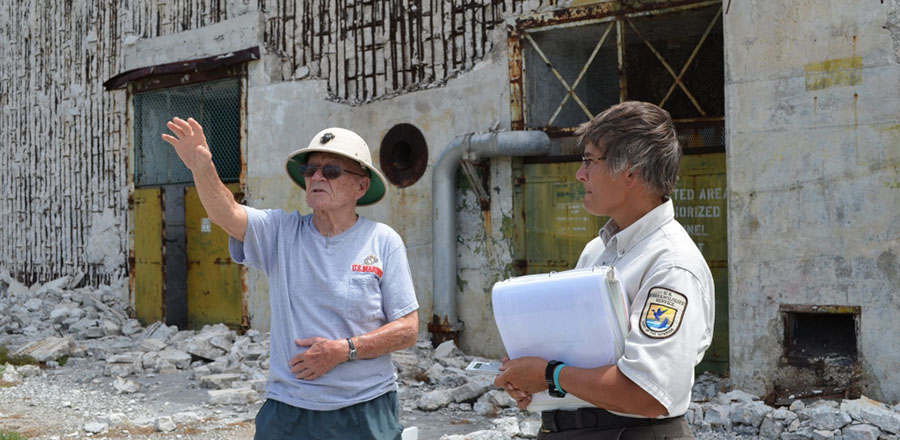
Photo by: Joe Owen/Courtesy of Friends of Midway Atoll

Battle of Midway veteran and wildlife advocate Colonel John Miniclier pauses near his former WWII command post to reminisce about what it was like on top of a light search tower when Midway was attacked on December 7, 1941 and again during the Battle of Midway. He passed away in May 2025 just shy of 104 years old.

Primary Sidebar

Preserving, protecting, and restoring the biological diversity and historic + cultural resources of Midway Atoll

📨 Don’t miss out!

Sign up to receive email updates and to hear about the latest news from Midway and FOMA!

We will never share your information + promise to keep your email address safe.

Stay connected with FOMA

  • Facebook
  • Instagram
  • YouTube

Explore more

💳 Donate📰 Subscribe

Footer

Friends of Midway Atoll

17 Katrina Lane
San Anselmo, CA 94960

Copyright © 2025 Friends of Midway Atoll National Wildlife Refuge (FOMA)

Stay Connected

  • Bluesky
  • Email
  • Facebook
  • Instagram
  • YouTube
  • Terms of Use & Privacy Policy
  • IRS Form 990